I Adopted a Girl 12 Years Ago — Yesterday, She Gave Me an Envelope Her Father Had Left for Her
In this story
Ruth adopted a six-year-old girl who asked if she would leave too. Twelve years later, her adopted daughter handed her an old envelope from her father, and what it held changed everything between them.
In this story
- Earning Trust From an Adopted Daughter
- The Birthday Party and the Word She Never Said
- What the Adopted Daughter’s Father Wrote
- Why Her Father Gave Her Up
- The Key Taped to the Letter
- The Secret the Adopted Daughter Carried
- A Grief Kept Secret Since 16
- The Night After the Party
- Why Hearts Are Not Tidy
- The Safe-Deposit Box and a New Beginning
- What Was Inside the Box
- Two Truths in One Car Ride
- One Story, Not Two
- A Bridge Between Two Parents
I ADOPTED A GIRL 12 YEARS AGO — YESTERDAY, SHE GAVE ME AN ENVELOPE HER FATHER HAD LEFT FOR HER
I can still remember the first time I saw her. She was only six, sitting off to the side, holding onto a small, worn backpack as if it were her only source of comfort. When I tried to smile at her, she didn’t respond like most children would. Instead, she gazed directly at me and quietly inquired, “Are you going to leave too?”
That question has stayed with me.
Earning Trust From an Adopted Daughter
Shortly after, I brought her home, but earning her trust was a slow process. She kept her distance, never referring to me as “mom,”, and I never forced it. I reassured myself that if that word ever came, it had to be genuine. So, I remained patient. Through every early morning, every difficult night, every time she pushed me away, and every small step she took toward me.
Gradually, she started to open up. She laughed more, shared more, and let me into her world in ways she hadn’t before… yet that one word still hadn’t been spoken.
The Birthday Party and the Word She Never Said
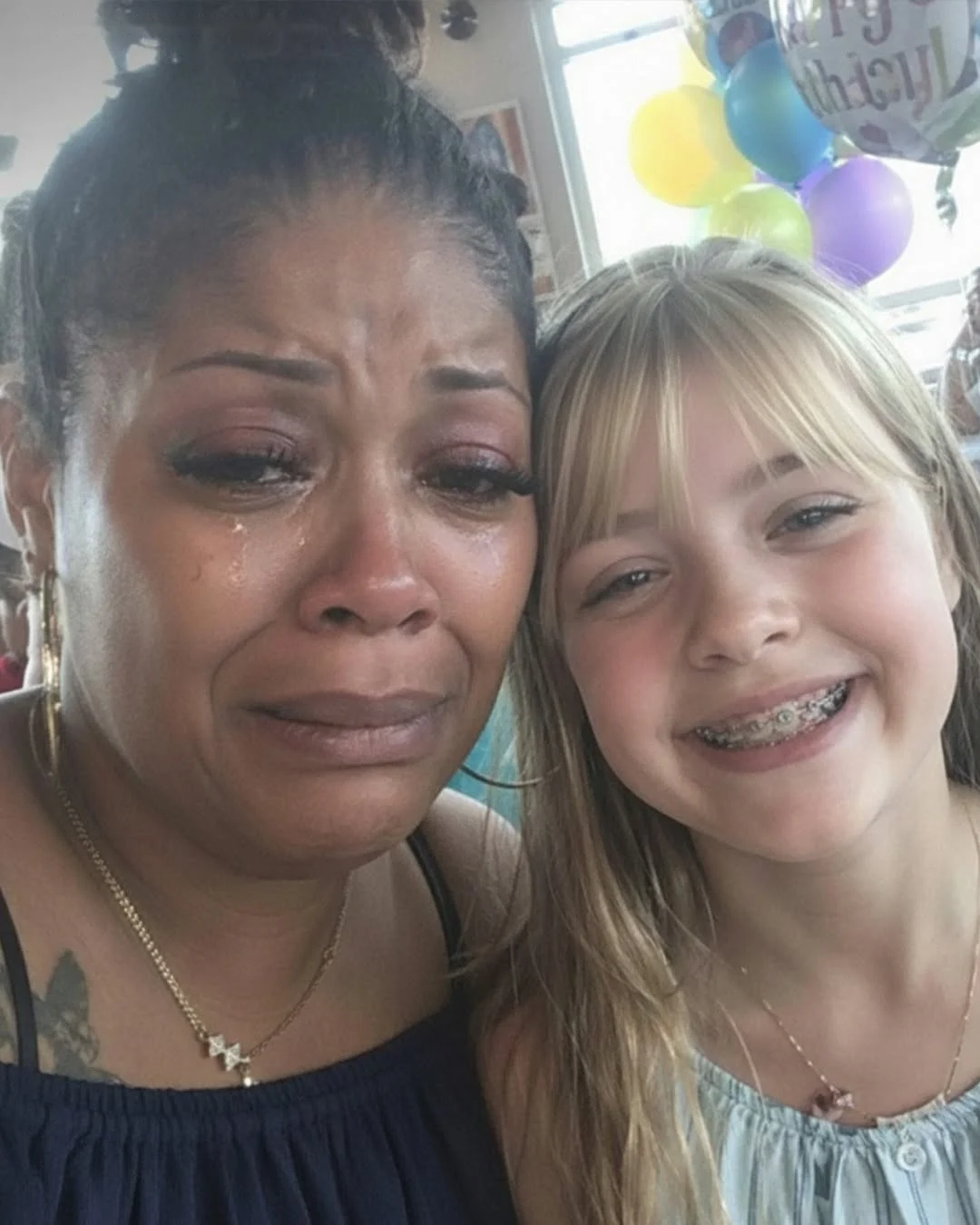
Yesterday, she celebrated her 18th birthday.
The house was filled with people and vitality, exactly the kind of celebration I had always wished for her. I stood there watching her, pondering whether all I had done was sufficient for her.
Then she softly tapped her glass.
“Can I say something?” she asked, and the room fell silent.
Her gaze met mine.
“I want to thank my mom,” she said.
I was frozen in place.
After all those years… she finally said it.
She approached me, fighting back tears, and placed an old envelope in my hands.
“My dad gave this to me when I was six,” she said gently. “He told me to give it to the person who would become the most important in my life.”
My fingers shook as I looked down at it…
At first, I just stared at the envelope.
Then my hands shook so badly that I could barely hold it.
“Alma…” I whispered.
“I never let anyone touch it,” she said. “Not social workers, foster parents, or therapists. Not me, either. I thought if I opened it too soon, it would mean something. And I wasn’t ready for whatever that was.”
Soon the room around us had disappeared. There could have been a parade in the living room, and I wouldn’t have noticed.
On the front of the envelope, in faded blue ink, was written:
For the one who stays.
That nearly took me out.
I looked up at her. “Are you sure?”
She gave me the tiniest nod.
So I opened it.
What the Adopted Daughter’s Father Wrote
Inside was a letter, folded into thirds so many times the creases were beginning to split. There was also a small brass key taped to the back.
Next, I unfolded the paper carefully.
The handwriting was messy, like it had been written by someone trying to finish before courage ran out.
It said:
If you’re reading this, then my daughter found someone who stayed.
First, thank you. There’s no clean way to write what comes next, so I’m not going to try. My name is Ronald. I’m Alma’s father. If she gave you this, it means you matter more than I ever hoped anyone would.
By the second line, I was already crying.
So I kept reading.
I don’t know what Alma has been told about me. Maybe nothing good. Maybe nothing at all. Some of that I earned. I am writing this because she deserves the truth from somebody, and I don’t trust myself to still be around or brave enough when the time comes.
I had to stop and breathe.
My adopted daughter’s hand found mine and squeezed once.
Then I read the rest.
Why Her Father Gave Her Up
Ronald wrote that Alma’s mother had died when Alma was four. After that, he fell apart. Not all at once, not in one dramatic collapse. In ordinary, ugly steps. He lost work and started drinking.
Pills followed, along with promises he couldn’t keep. He wrote that by the time he understood how bad things had gotten, Alma had learned not to ask for things because she could see the answer on his face before he said it.
Then came the line that made the whole room in my house go completely still, because by then I had started reading out loud without meaning to.
The day I let her go, she thought I was leaving her. The truth is, I was trying not to ruin what was left of her life.
Still, no one moved.
Not a clink of glass or a cough. Nothing.
He wrote that he had been given one final chance by a caseworker who told him, very plainly, that if he really loved his daughter, he needed to stop making her live inside his collapse.
So he signed the papers.
Not because he did not want her, but because he did.
That difference wrecked me.
The Key Taped to the Letter
Then I got to the part that explained the key.
The key opens a box at Harbor Trust Bank. It’s under Alma’s name. There isn’t a fortune in it. I wasn’t that kind of man. But it’s what I could keep from selling, stealing from, or losing. Her mother’s necklace. Some pictures. A cassette tape of Alma laughing when she was two. A few letters I wrote when I was sober enough to mean them.
Meanwhile, Alma was staring at the floor, crying silently.
So I kept reading.
If I never got clean, tell her that I knew what I was. Tell her none of it was her fault. Tell her she was the best thing I ever held in my hands, and that I walked away because I finally understood my love was not enough to raise her safely.
Then the last part:
If she lets you read this, then you’re the person I hoped existed. The one who did what I couldn’t. The one who stayed long enough for her to trust. Thank you for loving my daughter. Please don’t let her grow up believing she was left because she wasn’t enough. She was always more than enough. I just wasn’t.
There was no signature flourish. Instead, there was just:
– Ronald
The Secret the Adopted Daughter Carried
Afterward, I don’t know how long I stood there holding that letter.
At some point, my adopted daughter said my name.
Slowly, I looked up.
By then her mascara had run. She looked eighteen and six years old at the same time.
“There’s more,” she said softly.
“What do you mean?”
Then she handed me a note. It didn’t seem to be part of the letter and was in Alma’s handwriting.
It had only a few lines on it.
He died three years after I entered care. Overdose. A friend with whom he used to do drugs told me when I turned 16, and I never knew what to do with that.
I think that was the moment the whole thing shifted from an emotional birthday speech to something much bigger. A grief she had been carrying alone in secret for years had just walked into the room and sat down between us.
A Grief Kept Secret Since 16
Afterward, I touched her face. “You knew?”
She nodded.
“Since 16?”
Another nod.
“Why didn’t you tell me?”
Her mouth trembled. “Because I didn’t know how to talk about him without feeling disloyal to you. And I didn’t know how to love you without feeling disloyal to him.”
That sentence broke my heart in such a specific way I don’t think I’ll ever recover from it.
So I pulled her into me, and this time she didn’t hesitate. She folded into my arms like she’d been holding herself together through sheer force of will.
Into my shoulder, she whispered, “I wanted it to be you.”
I tightened my arms around her. “What?”
“The person who opened it,” she said. “I wanted it to be you. I think I wanted it to be you for a long time.”
That did it. Finally, I was done pretending to be composed.
The party ended gently after that. People understood. Her friends hugged her. Her uncle took the cake into the kitchen and wrapped slices that no one asked for. A few guests cried on the way out. It was that kind of night.
The Night After the Party
After everyone left, my adopted daughter and I sat on the floor in the living room with the letter between us and the brass key on the coffee table.
For a while, neither of us spoke.
Then she asked, “Do you think he meant it?”
“Which part?”
Then she looked down. “That he wanted me. That he loved me. That letting me go was him trying to save me, not get rid of me.”
I answered too quickly, because some truths deserve immediacy.
“Yes.”
She pressed her lips together. “You don’t know that.”
“I do, actually.”
She looked at me then, skeptical in that familiar teenage way.
I said, “Selfish people don’t usually write letters thanking the person who did better than they could. Selfish people don’t put away the only valuable things they have and save them for their child. Selfish people don’t tell the truth in a way that makes them look worse.”
My adopted daughter’s eyes filled again.
I continued, quieter now. “I think your father loved you very much. I also think he was very sick. Both can be true.”
She covered her face with both hands.
“I hate that,” she said into them.
“I know.”
“And I hate that I missed him.”
“I know.”
“Worse, I missed you, too, for years, while you were right here.”
That one got me.
Why Hearts Are Not Tidy
I moved closer and said, “Alma, listen to me. Loving the people before me doesn’t take anything away from me. Missing him doesn’t betray me. Calling me ‘mom’ doesn’t erase him or your mother. Hearts are not that tidy.”
Slowly, she lowered her hands.
“I don’t know why I waited so long.”
I gave a wet laugh. “Honestly? Because you like drama.”
That made her snort in spite of herself.
Then she leaned against the couch and asked, “Will you come with me tomorrow?”
“Where?”
“To the bank.”
The Safe-Deposit Box and a New Beginning
So the next morning, we went.
Harbor Trust was one of those old downtown banks with marble floors and people who speak in soft voices as if money startles easily. The man at the desk looked confused by the tiny brass key until an older manager came over, took one look at it, and said, “Safe-deposit archive.”
Apparently, the box had been paid forward for twenty years.
Soon, the manager took us into a private room and set a small metal box in front of us before leaving us alone.
Then my adopted daughter looked at me. “You open it.”
“No,” I said. “We open it.”
What Was Inside the Box
Inside, we found exactly what Ronald had promised.
A thin gold necklace with a small oval pendant.
A stack of photographs held together with a rubber band so old it cracked when Alma touched it.
Three letters in separate envelopes marked ages ten, fourteen, and eighteen.
And an old cassette tape in a clear case labeled in shaky handwriting: Alma laughing in the tub – age 2.
Then my adopted daughter picked that up first.
Suddenly, her face changed.
Not dramatically. Just softened in a way that looked almost painful.
“He kept this?”
The photos were hard to look at for reasons I didn’t expect. There was Alma as a toddler on a man’s shoulders. Alma, in a winter coat eating, something chocolate, and wearing most of it. Alma asleep on a couch with her hand wrapped around one of Ronald’s fingers.
He looked tired even in the pictures. Thin and a little frayed around the edges. But when he looked at her, there was no mistaking it.
Love is hard to fake in a photograph.
My adopted daughter cried over the necklace.
I cried over the photos.
We both lost it over the tape because neither of us had any way to play a cassette in 2026, which felt absurdly unfair.
“We’re finding a cassette player today,” she said, wiping her eyes.
“Absolutely,” I said.
Two Truths in One Car Ride
Later, back in the car, she held the 18th-birthday letter on her lap but didn’t open it yet.
“You can wait,” I told her.
She nodded. “I know.”
Then, after a long silence, she said, “Do you ever think two things can be true and still feel impossible together?”
“Constantly.”
Then she turned to look at me. “I feel sad for him. Angry at him. Grateful to him. And furious that I am grateful. And guilty for making you wait 12 years to hear me call you mom.”
So I reached across the console and took her hand.
“That sounds about right.”
Then she laughed through her tears. “This is such a mess.”
“It is.”
Then she squeezed my hand and said, very quietly, “Mom?”
I looked at her.
Finally, she smiled a little. “I think I’d like to keep calling you that.”
One Story, Not Two
Last night, after all of it, we sat at the kitchen table eating leftover birthday cake out of bowls because neither of us had the energy for plates.
My adopted daughter was wearing one of my sweatshirts. Her hair was tied up badly. The gold necklace was around her neck.
She looked younger like that. Softer.
She poked at her cake and said, “I used to think being adopted meant my life had two separate stories. Before you and after you.”
So I waited.
Now she said, “I don’t think that anymore.”
“What do you think now?”
She looked at me for a long moment before answering.
“I think maybe I had one story. It was just broken in the middle. And yesterday gave me part of it back.”
I’ve thought about that sentence all day.
A Bridge Between Two Parents
Maybe that’s what the envelope really was.
Not just a letter. Not just a goodbye from a man who ran out of time.
A bridge.
Between the father who loved her badly and the mother who loved her steadily.
Between the child who expected everyone to leave and the young woman who finally let herself believe someone stayed.
I don’t know what we’ll find in the other letters yet. We decided to open them when she’s ready. Not according to the ages on the envelopes, but according to whatever her heart can handle.
I do know this: last night, before she went upstairs, she stopped in the kitchen doorway and looked back at me.
“Good night, Mom,” she said.
It was so casual and natural, like the word had always belonged there.
And for the first time in 12 years, I didn’t hear what it took to get us here.
I just heard my daughter.
For one mother and her adopted daughter, a small envelope turned a quiet word into a whole story.
When a child finally trusts you with the truth they’ve carried for years, do you let the pain of what came before create distance, or do you embrace all of it and love them even more completely?
If you are thinking about adoption or want to support a child in foster care, as this mother did for her adopted daughter, Child Welfare Information Gateway offers guidance and resources for families.
Related: She Gave Up Her Newborn Son at 18—31 Years Later, a Silver Cross Revealed the Truth