Woman Diagnosed With Down Syndrome at 23 After Several Pregnancies Tested Positive
In this story
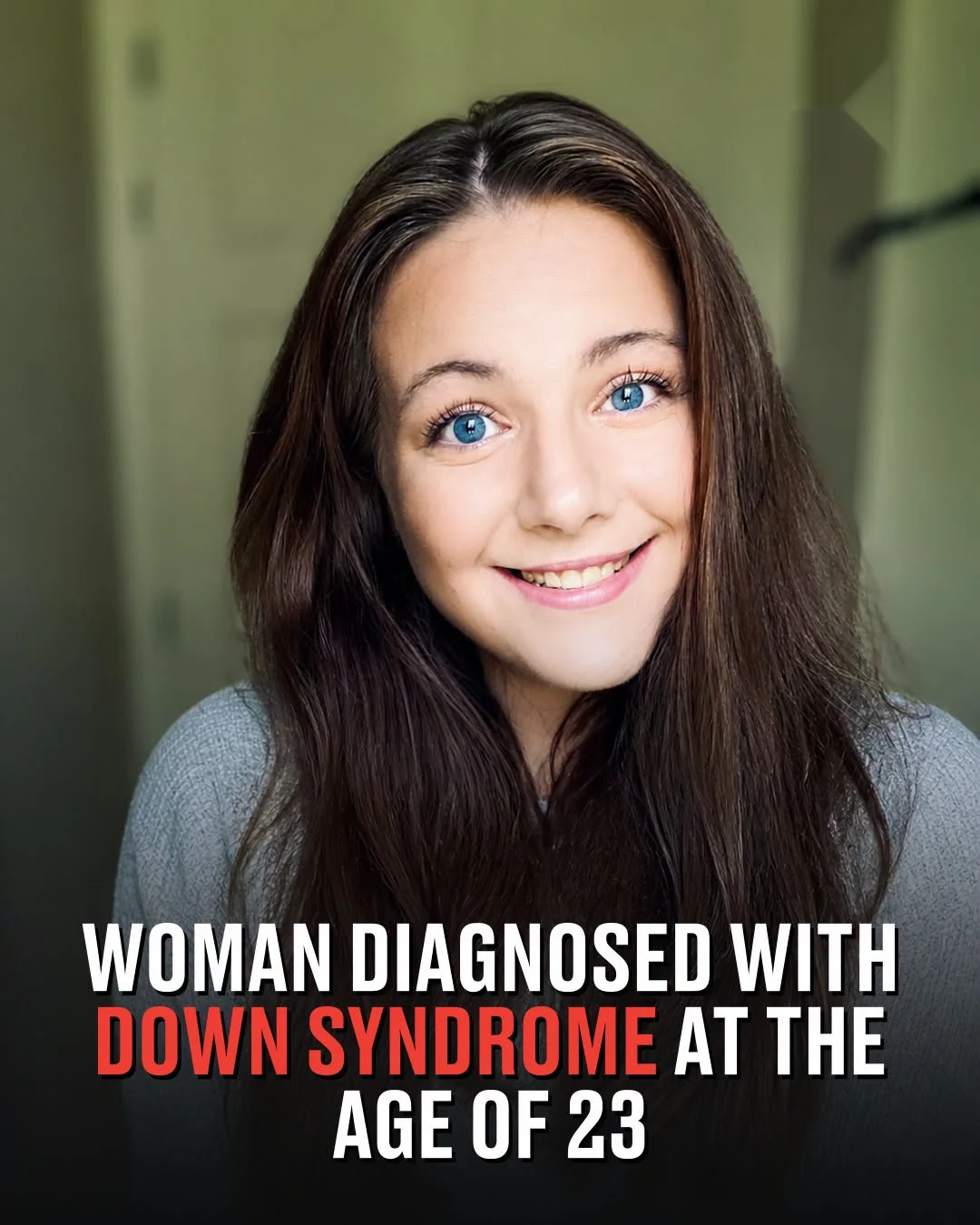
Ashley Zambelli is a mother of four from Macomb, Michigan. Diagnosed with Down syndrome at 23, she has said the news came as a relief. It finally gave her an answer. The diagnosis came only after several of her pregnancies tested positive for Trisomy 21. The account comes from a 2026 interview with Metro, later written up by LADbible. That LADbible report is the link that circulated with the Facebook post.
Down syndrome is often identified in pregnancy or early in childhood. Mosaic Down syndrome is much less common, and it can be harder to spot. Zambelli has described a form that, in her case, did not match the features many people expect. Metro first published its interview on May 21, 2026. An updated version ran on August 6, 2026, under Courtney Pochin’s byline. LADbible published a report based on that interview on August 13, 2026, and updated it on November 22, 2026. Metro described her as 26. The later LADbible report described her as 27.
What Led to Her Being Diagnosed with Down Syndrome at 23
In the Metro interview, Zambelli said her first pregnancy, in 2019, ended in a missed miscarriage. She then had an emergency procedure, a D and C. The hospital, she said, tested the tissue as a matter of protocol. The result showed a boy, and it also showed Trisomy 21, the genetic profile for Down syndrome. She later had a daughter, Lillian, who also tested positive. So did a later daughter, Katherine.
She told Metro that she and her husband, Taylor, at first thought they simply had a higher chance than other parents. “As not all of our kids tested positive,” she said. Then came Katherine, the third pregnancy that tested positive. “Alarm bells started ringing for my OBGYN,” she said, “as she’d never had a patient with that many positive results before.”
Her doctor referred her to a genetic counselor. According to Metro, blood tests came back without a finding of genetic abnormalities, but the counselor was not convinced. The counselor then did a buccal smear, a swab from the cheek and mouth. That test led to the diagnosis. LADbible gives the same sequence: blood tests did not show a clear difference, and a mouth swab did. Zambelli has said she was 23 at the time. Metro later listed her four children as of that 2026 interview. They were Lillian, then 5; Evelyn, 4; Katherine, 3; and Damian, 2.
What Mosaic Down Syndrome Means in Her Case
That finding left her diagnosed with Down syndrome at 23. Mosaic Down syndrome is a form of Trisomy 21. In this form, some cells have an extra chromosome 21, while other cells have the typical 46 chromosomes. Zambelli told Metro, “I have a low-level mosaicism of Trisomy 21 in up to 20 percent of my cells.” Metro reported that this form accounts for about 2 percent of Down syndrome cases. The real share could be higher, Metro said, because some cases go undiagnosed. LADbible similarly described it as about 1 or 2 percent of cases, and pointed to the National Down Syndrome Society.
LADbible quoted the National Down Syndrome Society on this point. The group said research has indicated that people with mosaic Down syndrome may have fewer characteristics of Down syndrome than people with other types. The same quote, however, warns against broad generalizations, because people with Down syndrome have a wide range of abilities. Metro made a similar point. In Zambelli’s own account, the signs were easy for others to miss. “The only thing I have is that my ears are smaller and they sit a little lower,” she told Metro. “But nobody ever sees my ears.”
She has also described health issues that started in childhood. Those included an abnormally high heart rate, joints that dislocate, and trouble at school. She told Metro it took her much longer to learn to read. She also said she often failed tests because she could not finish in time. “Doctors knew something was going on with me; they just didn’t know what.” As she got older, she said, they thought she might have lupus, because her father had it. When that idea fell apart, she said, “the doctors just stopped looking.”
Why She Felt Relief After Being Diagnosed with Down Syndrome at 23
Zambelli has said she was at the hospital with Lillian when she got the news by phone. Lillian was there for tests. A nurse walked in as she got off the call, and Zambelli was so happy that the nurse looked alarmed. “I’ve never seen so much concern on somebody’s face. She didn’t understand why I was so pleased to have been diagnosed with Down syndrome,” she told Metro. “I struggled to explain it to her, but I was just so glad to finally have an answer.”
She also told Metro it was “finally an answer that I could add to my medical chart.” She said she could then use it to get the help she needed. And she has said it changed how she relates to her children who have Down syndrome. “I almost feel like I can understand more of what they are going through and how their brain processes things,” she said. “It takes me longer to process things too, so I can just relate with them a little better.”
The Pushback She Describes, and the Awareness Work
The same interviews, however, include a harder side of the story for someone diagnosed with Down syndrome at 23. Zambelli has said some of her care got more complicated after the diagnosis. “Everything is just chalked up to my diagnosis,” she said. “Everything is blamed on Mosaic Down’s syndrome.” She has also said some doctors brush her off and do not believe she has Down syndrome. People, she claims, have told her she does not have “real” Down syndrome. They have also told her that she does not look “Down’s syndrome enough,” because she does not have the usual physical features.
Diagnosed with Down syndrome at 23, she now posts about the mosaic form on TikTok and Instagram. According to Metro, she often hears from doctors and nurses who say they did not know about it at all. The main doctor she sees for checkups, she also said, was not aware that mosaic Down syndrome existed. According to Metro, some biology professors have even used her social media posts in class. She said she feels honored, and also surprised, because she is not a doctor. She is sharing her own experience.
Related: She Said She Raised Her Son Alone
Sources: Courtney Pochin, Metro, May 21, 2026, updated August 6, 2026. Also Britt Jones, LADbible, August 13, 2026, updated November 22, 2026. The details above come from those reports and from Zambelli’s own comments in them. Mosaic Down syndrome is a real medical diagnosis. This article does not offer medical advice.