Jesse Ridgway and Wife Ashley Respond to Backlash After Ending Pregnancy Over Down Syndrome Diagnosis
In this story
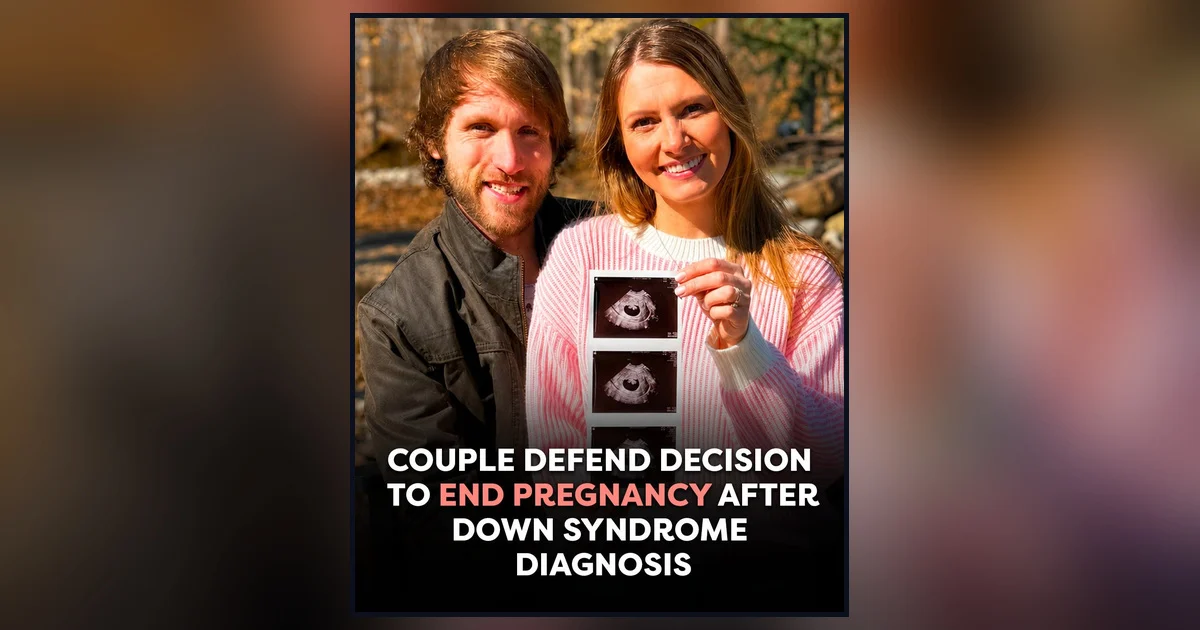
YouTuber Jesse Ridgway and his wife, Ashley, made headlines in June 2026. The couple shared that they had ended their pregnancy after a Down syndrome diagnosis. Their post set off a heated debate online. Some people sent support, while others were angry. Here is what happened, what each side said, and what the facts show.
Jesse Ridgway is best known as McJuggerNuggets online. He has made videos for about 20 years. His main YouTube channel has more than 4.3 million subscribers, according to the Los Angeles Times.
How Jesse Ridgway Shared the News
The couple married in October 2025. Then, in March 2026, they announced on Instagram that they were expecting their first baby. According to Page Six, they shared the next month that early screening showed a 95% chance of Down syndrome. Down syndrome is also called Trisomy 21.
Later, an amniocentesis test confirmed the result. According to the Los Angeles Times, the couple first spotted the early markers while filming a gender reveal video. “We were filming and ready to celebrate with our audience and we were blindsided,” Jesse said.
On June 3, he posted a long statement. “This week, my wife and I made the very difficult decision to terminate the pregnancy due to Trisomy 21,” he wrote. “The choice was not made lightly. We are devastated.” He added that Ashley had the procedure earlier that week and was “on the mend.”
Why the Couple Made the Choice
At first, Jesse said he felt “shocked but optimistic.” Then he read more about the condition. In his post, he listed health risks such as heart defects, hearing and vision problems and a shorter lifespan.
He also used blunt language about Down syndrome, which upset many readers. Later, he told Page Six that the research changed his mind. “I want my kids to outlive me and to be fully functional and be able to live a good life,” he said.
He also said the couple spoke with doctors, genetic counselors, friends and family first. “I hope people can empathize with that,” he said. Ashley, he added, wanted to share the story to help other women in the same spot.
Backlash and Support for Jesse Ridgway
The reaction was huge on both sides. “I’ve been making content for 20 years, so we’ve seen hate before. But not to this degree,” Jesse told People, as reported by Us Weekly. He said the couple got death threats. However, he also said “the amount of private support we’ve received is also overwhelming.”
Critics online said the post sent a hurtful message about the value of people with Down syndrome. Several pro-life groups also condemned the decision. Meanwhile, supporters said the choice was private and belonged to the couple and their doctors. Some parents of children with severe disabilities also shared how hard full-time care can be.
Jesse said many people messaged him with their own stories. “We’ve had people we’ve known for years suddenly feel comfortable with sharing their own abortion stories with us,” he said.
What Down Syndrome Groups Said
Major advocacy groups pushed back on how Jesse described the condition. The United Coalition for Down Syndrome includes the National Down Syndrome Society and the National Down Syndrome Congress. The coalition said his posts did not reflect current medical understanding, Disability Scoop reported.
Michelle Sagan of the National Down Syndrome Society gave some examples. “Most hearing conditions can be improved with tubes, and most vision conditions can be treated with glasses,” she said. She added that the survival rate for the most common heart defect is 97%.
Advocates also pointed to research showing many people with Down syndrome now live into their 60s and 70s. In addition, Madison Essig, who has Down syndrome, shared her story. “I graduated from college, have a full-time job, volunteer in my community, and pay taxes,” she said.
A Note on the Numbers
Jesse Ridgway wrote that up to 90% of women end a pregnancy after this diagnosis. However, the Global Down Syndrome Foundation said that figure mixes old studies from the U.S., Europe and Britain. A review of U.S. data from 1995 to 2011 put the rate at about 67%, Just the News reported.
According to the National Institutes of Health, about 6,000 babies with Down syndrome are born in the U.S. each year. The agency notes that “with appropriate support and treatment, many people with Down syndrome lead happy, productive lives.” Still, it also notes real lifelong health risks.
Where Things Stand
Jesse said the couple is still grieving. “For any couple who has gone through a decision [like] this, it never leaves your mind,” he said. Even so, they hope to try for another baby in the future.
In the end, Jesse Ridgway said he understands why people feel so strongly. “There’s so many facets to this subject,” he said. Both sides agree on one thing, though. The story started a much bigger talk about prenatal testing, disability and choice.