A Woman Says She Spent Five Years in Heaven During 15 Minutes of Clinical Death — Scientists Still Debate Near-Death Experiences
In this story
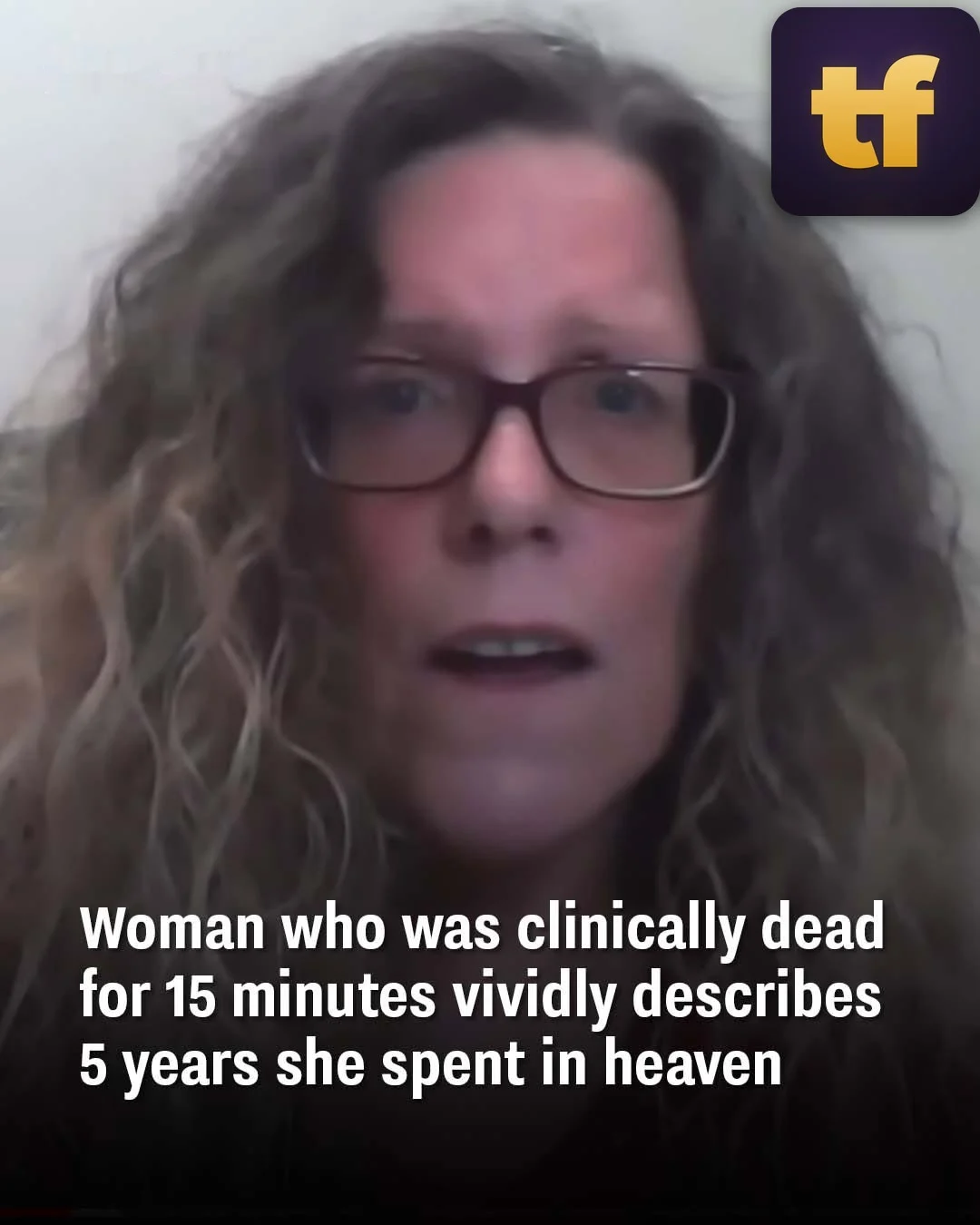
Scientists are still struggling to explain near-death experiences. One woman, Dr. Linda Kramer, says that while she was clinically dead for about 15 minutes, she spent what felt like five years in heaven — and she describes that world in vivid detail.
Here is her account, and why researchers still disagree about what experiences like hers mean.
What Linda Kramer Says She Experienced
According to Unilad, the episode began in the early hours of May 6, 2001. Kramer went to the bathroom and felt as if she were falling asleep. She later learned that clinicians had pronounced her medically dead for almost 15 minutes, while paramedics treated her.
In that time, she says, she felt as if she had been in heaven for five years. “Time did not exist” as we usually think of it, she said, so she estimated the time by how far she had traveled. She guessed that she could walk at about three to six miles an hour in ordinary life, and she used that to mark the passing of time.
She also said she could take any form she wanted, even becoming other people she met. “That’s when I found myself standing in what I termed the field of flowers,” she said. “I was observing the mountain range 30,000 times huger than Mount Everest.” She described skyscrapers that made Dubai look small, plus lakes and a panoramic view. If she wanted to be somewhere, she thought about it and felt instantly carried there.
This is her recollection. It is not independent proof of an afterlife.
Why Near-Death Experiences Are Still Debated
Unilad noted that other people who have been clinically dead and then revived have also described visions of an afterlife. The same article quoted a scientist who said consciousness cannot continue after death, so life after death is not possible. The article did not name that scientist.
In 2025, a team led by Charlotte Martial proposed a broad neuroscientific model, sometimes called NEPTUNE, in Nature Reviews Neurology. It tries to explain near-death experiences through changes in the brain, including blood flow, oxygen and carbon dioxide, neurotransmitters and threat responses.
Two researchers at the University of Virginia, Dr. Bruce Greyson and Dr. Marieta Pehlivanova, later argued that the model leaves too much out. They say it does not account for some of the most distinctive parts of near-death experiences, including rich, multi-sense memories that last for years, and out-of-body reports that, in some accounts, include details a person could not have seen from the hospital bed. They also say typical hallucinations usually involve only one sense and fade quickly, which does not match what many experiencers describe.
Greyson called the model a pioneering attempt, but said it “selectively ignored scientific evidence that contradicts the model.” In short, the science is still unsettled.
What We Can and Cannot Conclude
Kramer describes a long, detailed experience in a short window of clinical death. Brain-based models try to explain reports like hers without a soul or an afterlife. Critics say those models still cannot explain every feature people report.
None of that settles the question for any one person. Researchers are still gathering evidence, and they still disagree. Kramer’s story is one of the accounts that keep the debate going.
For more on that scientific dispute, see the University of Virginia’s summary of why some scientists say a leading model still fails to explain near-death experiences.
Related: Writer Who Predicted Covid Seven Years Early Names His Pick for the Next ‘Big One’
Source: Unilad (Joe Harker, Jan. 26, 2023); University of Virginia Health.