Jay Vandegriff Says Ozempic Left Him Suddenly Blind — And He Does Not Want Anyone Else to Go Through It
In this story
Jay Vandegriff, a grandfather of three from Coeur d’Alene, Idaho, says he lost more than two-thirds of the sight in his left eye after a rare “eye stroke” while taking Ozempic for type 2 diabetes. He is among more than 100 patients suing manufacturer Novo Nordisk, alleging the company failed to warn them of the risk. In mid-November 2026, the U.S. Food and Drug Administration ordered new warnings about that condition, called NAION, on Ozempic, Wegovy, Mounjaro, and Zepbound. Experts stress the complication is extremely rare, and researchers have not conclusively established a causal link.
Here is his account, and what regulators and the company say.
What Jay Vandegriff Says Happened on Ozempic
On Christmas Day 2024, Jay, then 70, noticed what he thought was a smudge on his glasses, blocking vision in his left eye. He cleaned them. The smudge was still there. “It was a bit like when you stare at the sun too long,” he later told the Daily Mail. “But otherwise, I felt fine.”
By the next day, the smudge had grown larger and darker, and he sought medical help. Doctors found he had non-arteritic anterior ischaemic optic neuropathy, or NAION, often called an eye stroke. Over the following six weeks, his vision kept getting worse until he had lost more than two-thirds of the sight in his left eye, in the bottom portion. Doctors said the damage was permanent, and there is no proven treatment that can restore it.
He had been taking Ozempic for 18 months to treat type 2 diabetes. Within months, he came to believe the injections could have been responsible. He stopped taking Ozempic at once on his doctor’s advice, but his eyesight still worsened for another six weeks.
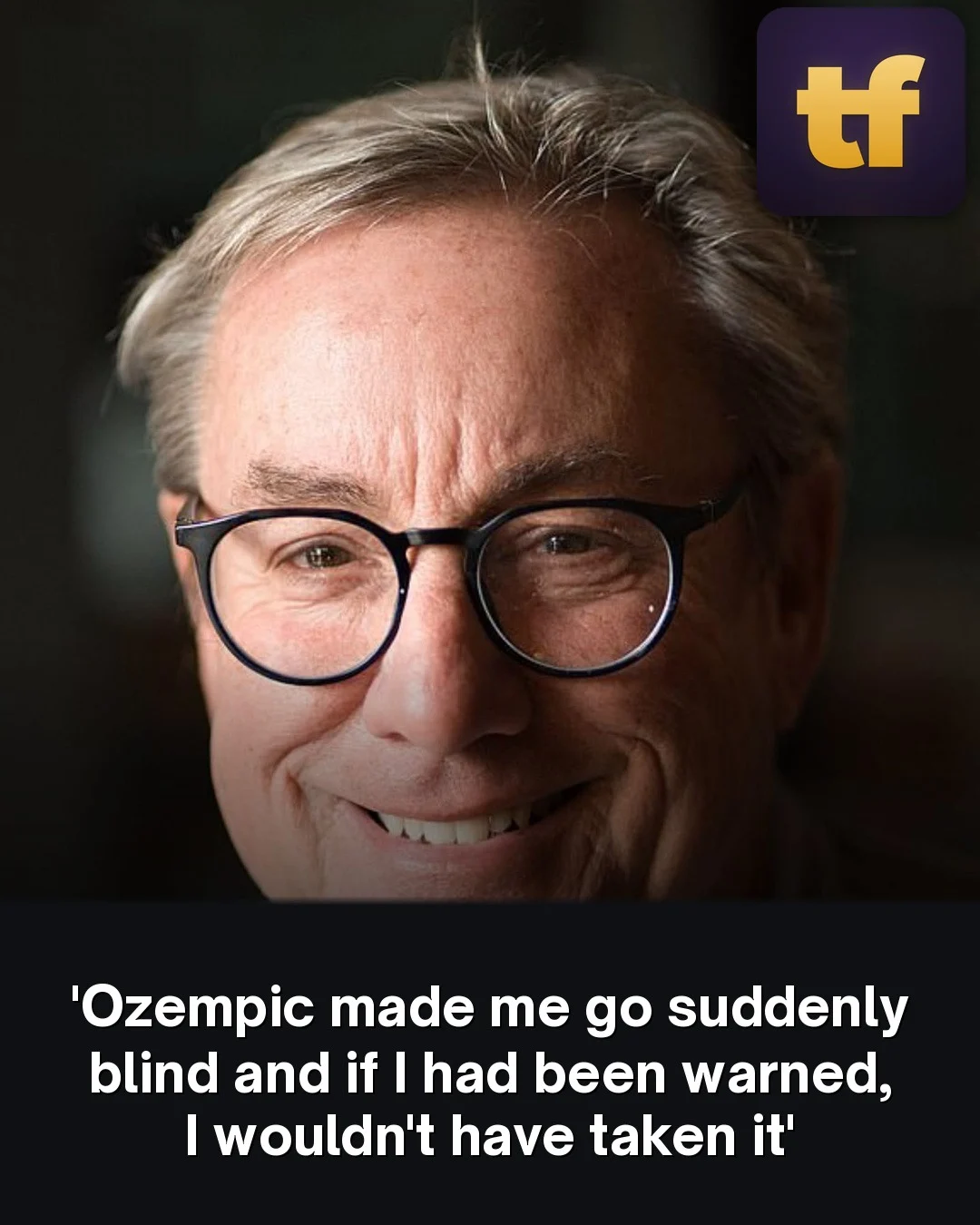
“If I had been warned it could affect my vision I wouldn’t have taken Ozempic in the first place,” he said. In a separate remark used with a photograph he provided, he put it this way: “Ozempic made me go suddenly blind and if I had been warned, I wouldn’t have taken it.”
How the Sight Loss Changed His Daily Life
Jay works in financial software and says he has had to buy a bigger screen because he starts seeing double and needs to take breaks. The sight loss also took much of his depth perception.
A keen skier, he moved to northern Idaho decades ago partly to be near a ski resort. Now he has to be far more cautious and will not go if it is cloudy or foggy, because he worries about his safety. Fly-fishing has suffered too: he can no longer see well enough to thread a line through a fly.
Simple tasks have become a struggle. He gets bruises from walking into things. He once walked into his two-year-old grandchild because he did not see him. Reading labels on food jars, he says, is impossible. In a grocery store he bumps into people, and sometimes they get angry. “People said my brain would adjust but it never has. The little things add up, like I can’t even use a screwdriver now.”
He increasingly relies on his wife, Susie, 69. Strangers often fail to understand, he says, because there is no obvious sign of his disability. He has described himself as depressed and angry, and as feeling “dismembered.” “I don’t look dismembered, but I feel dismembered,” he said. “I don’t want anyone else to go through what I’ve gone through.”
What Scientists and Regulators Say About Ozempic and NAION
NAION occurs when something interrupts the blood supply to the optic nerve, It typically causes a sudden, painless loss of vision in one eye, often as a blurred, dark, or missing patch. The condition can occur without any medication, especially in people with diabetes, high blood pressure, or other circulation problems. People with type 2 diabetes already face a considerably higher risk, whether or not they take the injections.
Some studies have raised concern that widely prescribed GLP-1 drugs could increase that risk. In 2024, researchers reported that patients taking semaglutide, the active ingredient in Ozempic and Wegovy, were around four times more likely to develop NAION than those taking other diabetes treatments. A later analysis in JAMA Network Open found a 76 percent higher risk among patients taking semaglutide or tirzepatide, the ingredient in Mounjaro and Zepbound, than among those on other diabetes medicines. Even so, the researchers stressed that the overall likelihood remained low.
The FDA’s review of 126 clinical trials estimated about six cases in every 100,000 people taking the drugs for a year, compared with about four in every 100,000 on a placebo or other diabetes medicines. In mid-November 2026, that review led the agency to require new NAION warnings on GLP-1 receptor agonist drugs. Britain’s MHRA issued a similar warning in February 2026, and European regulators had already acted. The MHRA has advised patients on semaglutide who notice a sudden change in vision to seek urgent medical help.
Not every study has found an increased risk. A company-funded analysis in the British Journal of Ophthalmology found no increase in NAION among patients taking Novo Nordisk’s drugs, compared with a placebo. Experts still stress that the complication is extremely rare and that a causal link remains unproven.
The Lawsuits and Novo Nordisk’s Response
Jay is among more than 100 patients taking legal action against Novo Nordisk, alleging a failure to warn. His lawyer, Danielle Gold of Weitz and Luxenberg, has said the firm has filed more than 100 similar cases, with up to 150 more pending. She described his injury as very serious and life-altering, and said he is seeking compensation because the damage is permanent and has affected his independence and his ability to work.
A Novo Nordisk spokesman said the company believes the personal injury lawsuits filed in the United States are without merit and is vigorously defending them. The company said it is aware of reports and epidemiological data concerning NAION in patients treated with semaglutide, and that it is continuously assessing the available data. “A causal relationship between semaglutide and NAION has not been established,” the spokesman said.
Jay wants other patients to know about the risk he says he never heard. “I want to let people know that there are potential side effects [to Ozempic and similar drugs] beyond what is currently being warned about.”
Related: Husband Says His Wife Never Smoked or Drank — He Believes Everyday Talcum Powder Caused Her Cancer
Source: Daily Mail.