Aspergillus Fungus Warning: What a 2025 Climate Study Actually Found
In this story
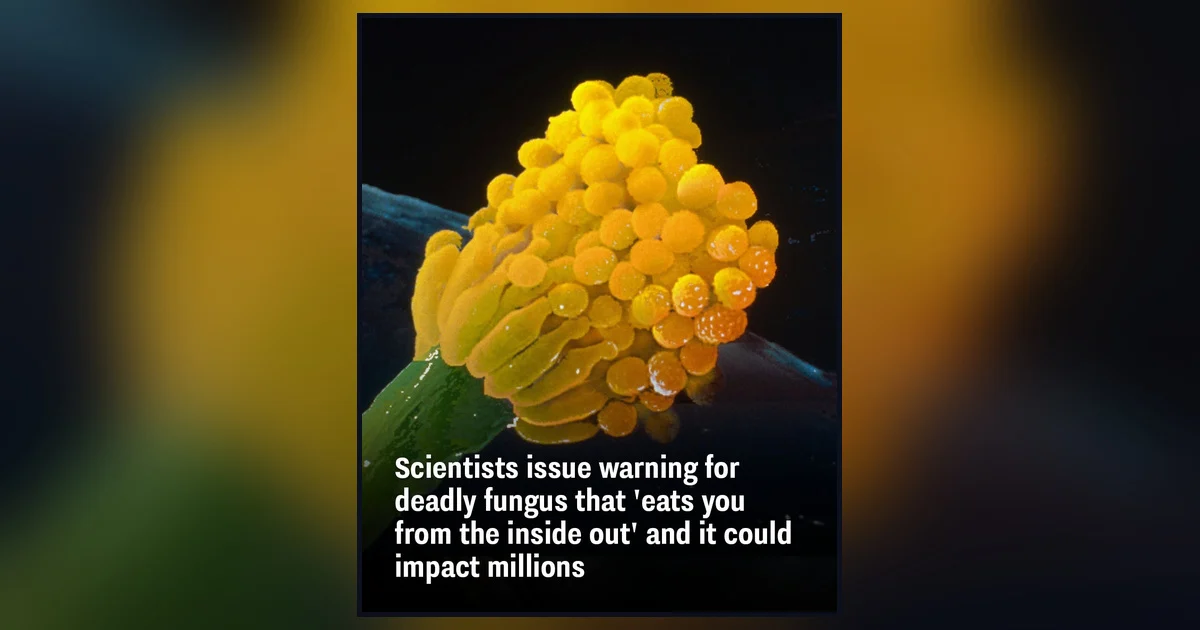
An Aspergillus fungus warning has spread again on Facebook. The post comes from UNILAD and went up on June 16, 2025. It pointed to a climate study from the University of Manchester. Researchers first shared that work in May 2025, while other scientists were still reviewing it. The same team later published the paper in iScience on February 5, 2026.
In this story
The warning is real in one sense. Aspergillus can cause a serious lung disease called aspergillosis. However, the study does not show a new outbreak racing across the United States right now. Instead, it maps where three common molds may find suitable habitat as the climate changes.
Aspergillus Fungus Warning and What the Study Measured
The paper comes from Christopher Uzzell, Jennifer Shelton, and Norman van Rhijn. Van Rhijn works at the University of Manchester. They used climate models to estimate future habitat for three molds. Those molds are Aspergillus fumigatus, Aspergillus flavus, and Aspergillus niger. Wellcome funded the work.
CNN covered the research on May 24, 2025. At that time, the paper was still a preprint, so peer review was not complete. The journal version came out in early 2026. A University of Manchester news release had also described the findings in May 2025.
People inhale these spores every day. The CDC says most people do not get sick. The mold lives in soil, dust, plants, and decaying matter. In addition, it cannot spread from person to person. That basic fact should sit beside any Aspergillus fungus warning.
Who Faces the Greatest Risk
For people with healthy immune systems, breathing the spores is usually harmless. The picture changes when the body cannot clear them. Van Rhijn put it bluntly to CNN. If the immune system fails, the fungus “starts to grow and basically kind of eat you from the inside out, saying it really bluntly.”
The CDC says people with weakened immune systems or lung disease face the highest risk. Invasive aspergillosis is the most severe form. It can start in the lungs and then spread. People at highest risk include transplant patients. The same is true for people on chemotherapy or high-dose steroids. Severe lung infections can also raise the risk.
Other forms can affect people with asthma or cystic fibrosis. Chronic lung disease, including COPD or a history of tuberculosis, can raise risk as well. Common symptoms include cough and shortness of breath. Invasive disease can also bring fever, chest pain, or coughing up blood.
Van Rhijn told CNN that aspergillosis can have very high death rates, around 20% to 40%. A 2024 review in The Lancet Infectious Diseases looked at severe fungal disease worldwide. Professor David W. Denning put the yearly count at about 6.5 million serious fungal infections. He also put linked deaths at about 3.8 million. The fungus caused about 2.5 million of those deaths directly. The same review put yearly cases of the severe lung form above 2.1 million.
These infections are also hard to treat. The CDC notes that one common species is growing resistant to azole drugs in the United States.
How Climate Change Could Shift This Mold
The study does not count new infections year by year. Instead, it models where the climate may become more or less suitable through 2100. In other words, this Aspergillus fungus warning is about future range, not a current outbreak. The team used three emissions paths, known as SSP126, SSP245, and SSP585. They also looked at three time windows: 2041 to 2060, 2061 to 2080, and 2081 to 2100.
Under strong warming, the molds tend to shift north. A. flavus, a species that prefers warmer regions, is a clear example. Under a moderate path, the model shows new areas in northern China, Russia, and part of northern America. Under the high-warming path by 2100, much of the range in Africa and Brazil shrinks. Large parts of Australia also become less suited to it. At the same time, more of northern China, Russia, Scandinavia, and Alaska become suited to it.
A. fumigatus already lives in Europe, the United States, and parts of China, and it shows a similar shift. Under the high-warming path, the model pushes that range farther toward the North Pole. In contrast, some parts of Africa may become too hot for some of these molds to thrive.
The team also found a link between the environment and disease. In countries with enough data, the mix of species in serious lung cases often matched the mix in soil. So a shift in where the molds can live could, in time, change which species doctors see.
What This Aspergillus Fungus Warning Gets Wrong
Some social posts, including the UNILAD article, made the threat sound like a sudden invasion. This Aspergillus fungus warning also overstated some numbers. For example, they said the fungus was spreading at alarming rates across the United States. The study does not show that. Aspergillus is already common in the environment, including in the United States. As the CDC notes, most people breathe in the spores every day without getting sick.
The university’s May 2025 news post also cited sharp rises in Europe. It said one species’ range could grow by about 16%, with one million more people at risk in Europe. It also said another species’ range could grow by 77.5%, exposing nine million people in Europe. News outlets, including CNN, repeated those figures. However, they do not appear in the February 2026 journal paper.
What the Published Paper Found
The published paper instead reports a more mixed picture. Globally, fewer people may live in places the mold can thrive by 2100. That is largely because the range shrinks in Africa, Asia, and South America. For A. fumigatus, the global count could fall. It could go from 1.98 billion people today to as low as 650 million late in the century, under the high-warming path. In Europe, under that same path, the A. flavus range stays about the same. The figure is about 80 million people now, versus 75 million later. The A. niger range rises, from about 109 million to 170 million.
Authors also list clear limits. Genetic data often cannot tell species apart beyond a broader group. This model estimates relative suitability, not a sure forecast of infections. Large regions had little sampling, including the Amazon, the Sahara, and northern Russia. In short, this is a useful map of possible change. It is not a count of people who will get sick.
Justin Remais, a professor at UC Berkeley, spoke to CNN about U.S. cases. His team reviewed more than 100 million patient records. They found more than 20,000 aspergillosis cases between 2013 and 2023. He said the number is rising by about 5% each year. That is a real trend. Still, it is not the same as a climate map of future range.
How to Lower Your Risk
Most people do not need to fear a casual walk outdoors. The CDC says it is hard to avoid these spores, because the mold is so common. For people with weak immune systems, a few steps may help. The agency notes that researchers have not proven these steps stop the disease. Even so, they are reasonable.
Try to avoid dusty places such as construction or excavation sites. If you cannot avoid them, the CDC suggests an N95 respirator. It also suggests avoiding close contact with soil or dust. Wear shoes, long pants, and long sleeves during outdoor work. Clean skin injuries with soap and water. If you have had a transplant or another high-risk condition, ask your doctor about preventive antifungal medicine.
If you have symptoms you think may be this disease, contact a doctor. Do not treat a Facebook post as a diagnosis. The Aspergillus fungus warning is a reminder to take the science seriously. It is not a reason for healthy people to panic.