Woman’s Burning Leg Pain Turned Out to Be Ergotism, the Medieval ‘Holy Fire’ Disease, Caused by a Drug Interaction
In this story
A young woman’s burning leg pain turned out to be ergotism, a disease best known from the Middle Ages. People once called it “holy fire” or St. Anthony’s fire. Her doctors described the case in The New England Journal of Medicine in July 2020. So the story going around on Facebook is not new. Also, she did not catch the disease from food or from another person. Instead, it came from a reaction between two of her medicines.
Burning Pain From Her Toes to Her Thighs
The patient was a 24-year-old woman in India. She went to a clinic after two days of severe burning pain in both legs. The pain ran from her toes up to the middle of her thighs. In addition, her feet had changed color, and she had trouble walking.
Her doctors found something strange. Although she said her legs were burning, they were cold to the touch. Also, the doctors could not feel a pulse in the arteries behind her knees or on top of her feet. Those arteries carry blood to the lower legs and feet.
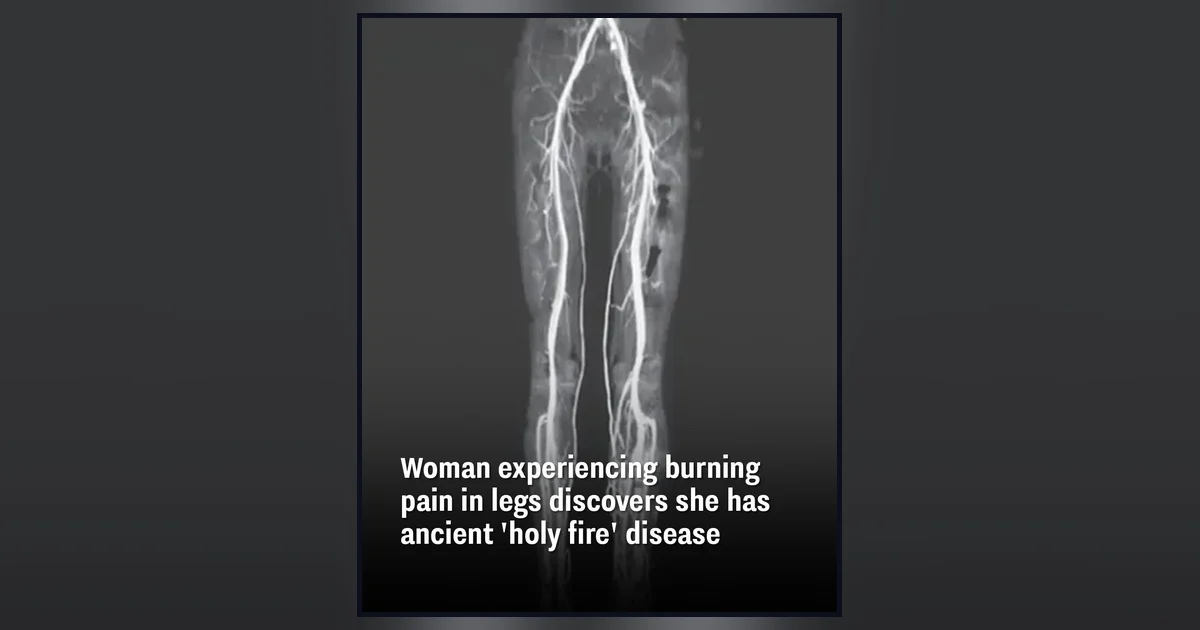
A CT angiogram, a scan that shows blood vessels, revealed the problem. The arteries in both legs had narrowed evenly along their length. As a result, blood could not reach her legs well. Dr. Aravind Reghukumar and Dr. Reshma Benson wrote up the case. They work at Government Medical College in Thiruvananthapuram, a city in southern India, according to Live Science.
How a Migraine Drug Led to Ergotism
So what caused it? Four days before her pain began, she had started taking ergotamine, a drug used for migraine headaches. She was also born with HIV. For that reason, she took several antiviral drugs, including ritonavir.
That mix was the key. Ritonavir blocks an enzyme called CYP3A4, which the body uses to break down ergotamine. Because of that, ergotamine built up in her blood to higher levels. The drug then made her blood vessels clamp down, which cut blood flow to her legs. Her doctors concluded the drug interaction caused her ergotism.
Doctors have seen this kind of reaction before. For example, in a 1999 report in the BMJ, doctors in Switzerland described a 28-year-old woman with HIV who developed severe ergotism after taking ritonavir with a medicine that contained ergotamine. According to Live Science, the National Institutes of Health warns that people should not take ergotamine with certain HIV medicines.
Treatment and a Lost Toe
Doctors gave her heparin, a blood thinner. According to a summary of the case report, she also received a prostaglandin drug through an IV. Soon her pain eased, and her legs grew warmer as blood flowed back.
Sadly, the treatment did not come in time to save every part of her feet. The second toe on her left foot had developed gangrene, so doctors amputated it. Two weeks later, another CT scan showed much better blood flow in both legs.
Why Ergotism Was Called Holy Fire
Ergotism has a long and dark history. Traditionally, it comes from a fungus called Claviceps purpurea, which infects cereal grains such as rye. In the Middle Ages, people who ate bread made from tainted rye got sick in large outbreaks, Live Science reported.
The symptoms were frightening. Some people had burning pain and gangrene in their limbs. Others had seizures and hallucinations. According to IFLScience, one account from the year 857 described “a great plague of swollen blisters” that “consumed the people by a loathsome rot, so that their limbs were loosened and fell off before death.”
The name St. Anthony’s fire came from an order of monks who had great success treating the disease, IFLScience noted. Meanwhile, some researchers have suggested ergotism may help explain strange events in history. These include the “dancing plague” in Europe and the symptoms of girls in the Salem witch trials. However, experts still debate those ideas, and some point to other causes.
Is Ergotism Still a Risk Today?
Ergotism from food is now rare. According to Live Science, public health steps such as removing infected grain from the harvest began in the 1800s. Since then, the disease has been uncommon.
Today, most cases come from ergot-based medicines, Live Science said. That can happen when doses are too high or treatment goes on too long. But as this case shows, it can also happen at normal doses if another drug blocks the body from clearing the medicine.
In the end, the lesson from this case is a practical one. Patients should tell every doctor and pharmacist about all the medicines they take. That simple step can help prevent a dangerous interaction like the one that led to her ergotism.